BlogEarn online
3 WAYS to MAKE MONEY ONLINE
, updated on 17 November 2024

One click, and Google will show my articles more often in your results.
Digital trends
New trends come out in the digital world every year, and they soon become topics to be fed to newspapers and trade magazines:
2014: Social food
2015: Drones
2016: Food Delivery
2017: Cryptocurrencies
2018: Artificial Intelligence
2019: Augmented Reality
Incubators, accelerators and events dedicated to the landscape of the digital world compete for the hashtag of the moment, and national newspapers are filled with dedicated articles and interviews.
“Whatever, come on, what’s wrong with that?” Absolutely nothing, but I want to tell you an anecdote.
The anecdote of the “Gold Rush”
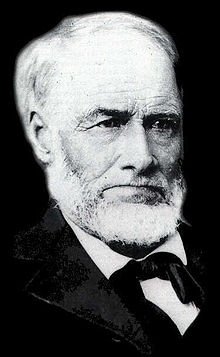
James Wilson Marshall, who initiated the 1848 “Gold Rush” in California
CALIFORNIA, JANUARY 24, 1848
James Wilson was a carpenter who was assigned to supervise the work of a sawmill co-owned with Johan Sutter. One day while examining the condition of the river channel bed located below the sawmill, he noticed some shiny specks and soon discovered that these were gold nuggets, with a very high level of purity (96 percent).
Although he had tried to maintain strict confidentiality about the discovery, the news quickly spread, ending up on the front page of all the newspapers.
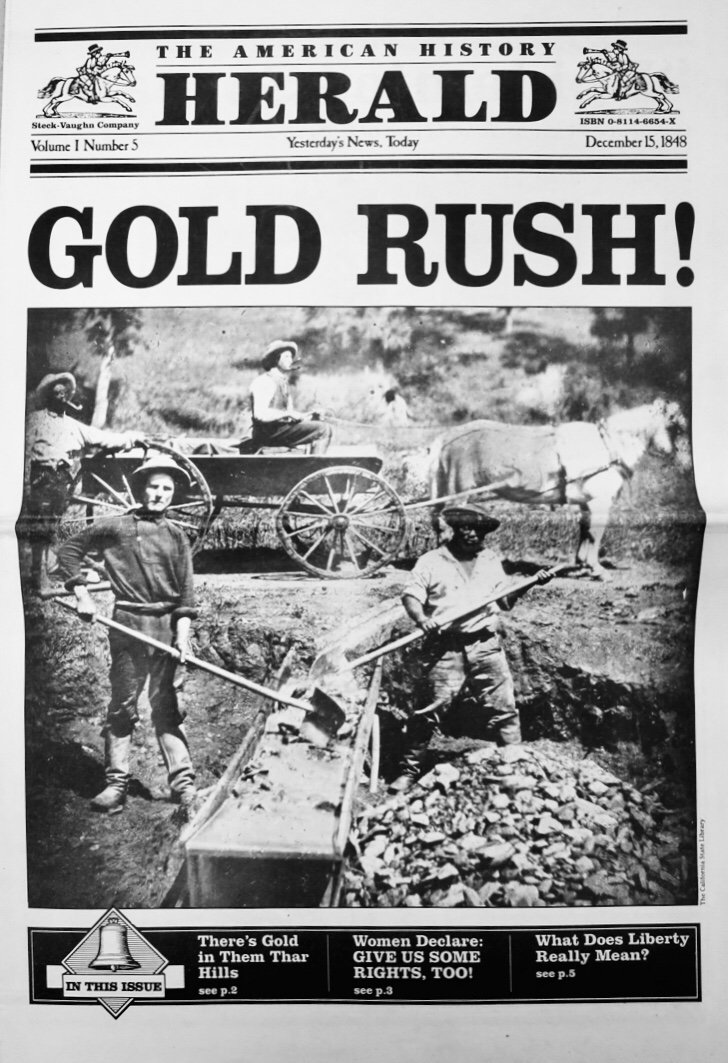
CARAVANS OF GOLD DIGGERS
Masses of people from all over the United States, moved to California. Everyone wanted to become rich in search of gold.
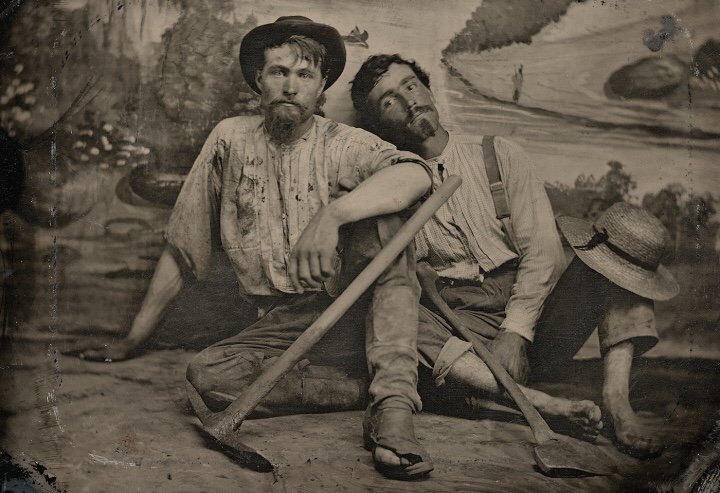
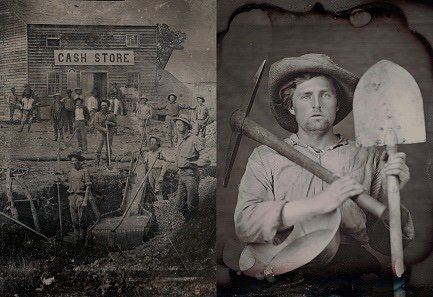
Some found the much-desired vein of gold, but a great many went home empty-handed or at worst penniless, having invested all their savings unsuccessfully.
Now stop for a moment and look carefully at the three period photographs I have included above: in all the pictures there are two repeating objects.
To be precise, indispensable tools for gold panning:

Shovel and pick.
Market demand for these two items increased dramatically. Sales did not depend on the success or failure of the searchers, and their production did not require special efforts.
All that was needed was to simply stand in a passing area.
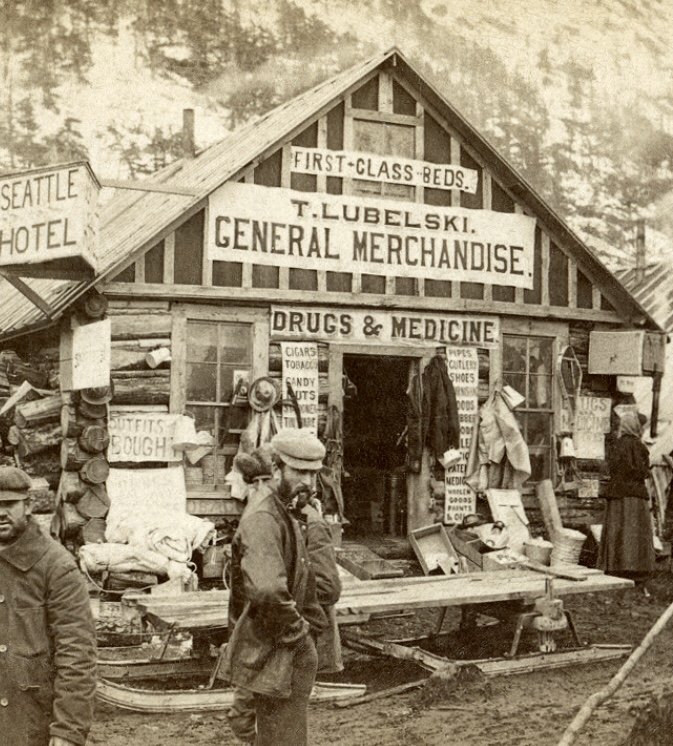
Although more than 150 years have passed, human spirit and ambitions have not changed with the passage of time.
Other examples in history
Table of Contents
THE TULIP BUBBLE
In the 1600s, the Tulip Bubble became famous, which featured the Dutch economy. People began buying bulbs, even before they were planted. This unwarranted increase in prices, caused many people to go into financial meltdown (Source: Wikipedia).

Who gained:
- Bulb producers
- Who sold them before the meltdown
- Those who offered tools for cultivation
CRYPTOCURRENCY BUBBLE
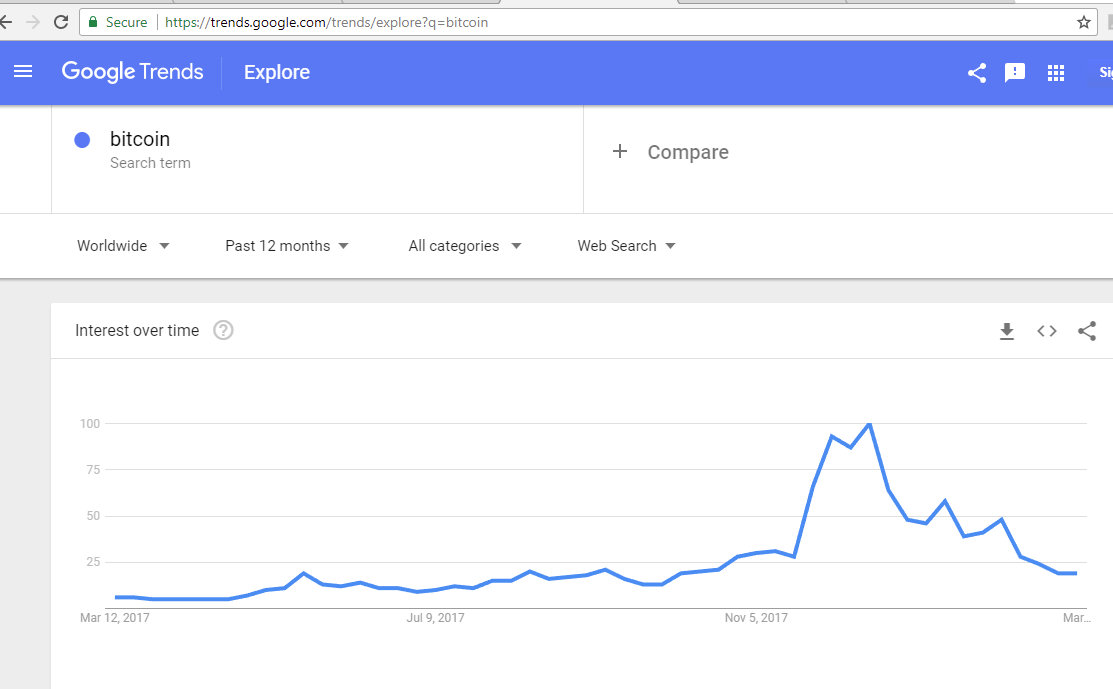
In more recent times 2017 we can certainly remember Bitcoin, where the unit value of the cryptocurrency soared over $10,000. In fact, even people who did not know what a cryptocurrency was at all entered the market, on the advice of their children and grandchildren, certain that they were making a good investment. Within weeks the value dropped precipitously, and to this day some are licking their wounds.

Who gained:
- The owners of dollar/bitcoin exchange platforms (also called exchanges) such as Coinbase, and the creators of cryptocurrencies such as Ripple and Ethereum (Source: Investing Today).
- Who held cryptocurrencies and sold them before the collapse.
- Themed information sites and bloggers.
Develops critical thinking
I wrote this article because I want to help you develop critical thinking. When you hear too much background noise around a hype (topic with excessive interest) always ask yourself this question:
Is this a moment of euphoria?
If one or more people, who until yesterday were dealing with something else in their lives, come to you to propose the deal of the century and slip in the hottest word of the moment, open your eyes wide.
Usually when TV and newspapers talk about it assiduously it is hype. You can easily check whether it is a general hype also thanks to Google Trends, which allows you to see the volume of Google searches for a given topic (and related words).
Always doubt, but don’t miss opportunities
Of course, with this article, I am not telling you to avoid industry trends no matter what: they are and always will be there; it’s part of technological evolution. There are industry trends such as food delivery that have exploded in recent years.
However, do not be hasty in your evaluations and use tools such as the aforementioned Google Trends frequently to try to predict them.
Three business models for your project
I wanted to tell you these historical anecdotes because nowadays market fashions and trends change at an impressive speed.
Now stop for a second, and imagine you are in a casino at a roulette table, here you will find:
- The Player (the betting player )
- TheDealer (the counter that allows players to play)
- The Servant (the waiter who serves you a cocktail at the table while you are playing)

The Player model
This type of approach requires that you, as a Player (player), once you find the trend or niche market, get your project off the ground as quickly as possible.
Let’s take a practical example on a trendy product from a few years ago:
“In a Facebook video there is a guy holding a radio control and piloting a Drone, taking a shot from above. Within minutes the news bounces on Twitter, and even on the evening news. Views to the post increase, and the main comments are, “Where can I buy it?” You then do some market research and realize that your impressions are correct: drone-mania has begun.
You decide to set off with your project: you create a business plan, set up your online store, look for the best supplier, open the VAT number, start the order, make the agreement with the courier to handle shipping, receive the products, take the photographs, create the product descriptions in multiple languages, create your marketing campaigns, and you are ready to sell.”
Now let’s see what the pros and cons are:
✅ PRO: If you can speed up all project start-up operations, you can cash in very well and in a short time, as you can make hitherto unobtainable products/services available.
⛔️ CON: There is a risk that once the interest bubble has deflated, you will be left with unsold products in stock, thus becoming a cost.
🚀 VELOCITY OF GROWTH: It can be very rapid from the beginning and then consolidate as competition arrives.
💪 APPROACH: aggressive.
⭐ TIP: You need to get really good at speeding up all the project startup phases so that you are among the first to offer them in the market. With experience, you will gain the ability to understand when it is time to change your industry to something else.
The Dealer Model
This method requires you to provide a space for players.
In the digital sphere, it involves creating a platform that brings traffic to the parties involved so they can transact and/or communicate.
Some examples in the market:
- Booking.com (hotel-customers)
- Matrimonio.com (suppliers for newlyweds-future brides and grooms)
- Subito.it (sellers-buyers)
- Dottori.it (doctors-patients)
- Uala.it (beauty salons-clients)
- Amazon.it (seller-customers)
- AddLance.com (freelance-clients)
- Facebook (people-people)
- LinkedIn (professionals-professionals)
Now let’s see what the pros and cons are:
✅ PRO: some entrepreneurial risks are not in your charge
⛔️ AGAINST: Greater technical knowledge; all stakeholders must be in balance to ensure project success.
🚀 SPEED OF GROWTH: Slow at an early stage, until stakeholders recognize you as an industry leader.
💪 APPROACH: medium.
⭐ TIP: Check the market interest and carefully consider investments in marketing, which must grow according to the number of registered users.
The Servant Model
The Servant model is the quietest and most disguised. But equally it can allow you to make a lot of money. The theory behind this method is to get on the side of the target industry and offer services/products, thus being functional to the parties involved.
Some examples in the market:
- Vertical industry blogs (useful information for stakeholders)
- Affiliate site (you take care of bringing traffic to a site and in return you collect money)
- Consulting for a specific area (legal, tax, IT, etc.).
Now let’s see what the pros and cons are:
✅ PRO: lower entrepreneurial risks.
⛔️ AGAINST: Specific knowledge about a topic is needed.
🚀 SPEED OF GROWTH: gradual and increasing.
💪 APPROACH: soft.
⭐ TIP: Success in the Servant Method dependent on your ability to do marketing and build relationships within your industry.
Conclusions and suggestions
The 3 methods I previously described to you are the basis of all the business models out there.
Once you understand which of these methods is most in line with your degree of risk and expertise, you can decide where to place yourself.
My advice is to approach your business initially with only one of these Methods and only at a later stage, when you feel ready and have gained experience, start a business with another Method.
Open a Finom business account and receive up to 3% cashback and a free month trialFind out how to open and manage your VAT number in 24 hours